Our Mission
Since its original founding, the mission of Dismas of Vermont, Inc. has always been to reconcile former prisoners with society and society with former prisoners.
By definition, a prisoner is "a person deprived of liberty and kept under involuntary restraint, confinement, or custody." Beyond literal restraint, confinement, or custody, the word can also be used to metaphorically describe a person controlled by a strong emotion or situation.
If we hold people accountable for their actions as a matter of justice, then reconciliation is a completion of that justice. For a person returning to the community to be reconciled, they need to overcome the sense of alienation that often comes with incarceration, feelings of shame, and trauma. They must become participating members of their community and be restored to full citizenship, with all its responsibilities and rights.
Community is fundamentally about relationships. In reconciliation, wholeness is restored to the former prisoner and to society.
What We Do
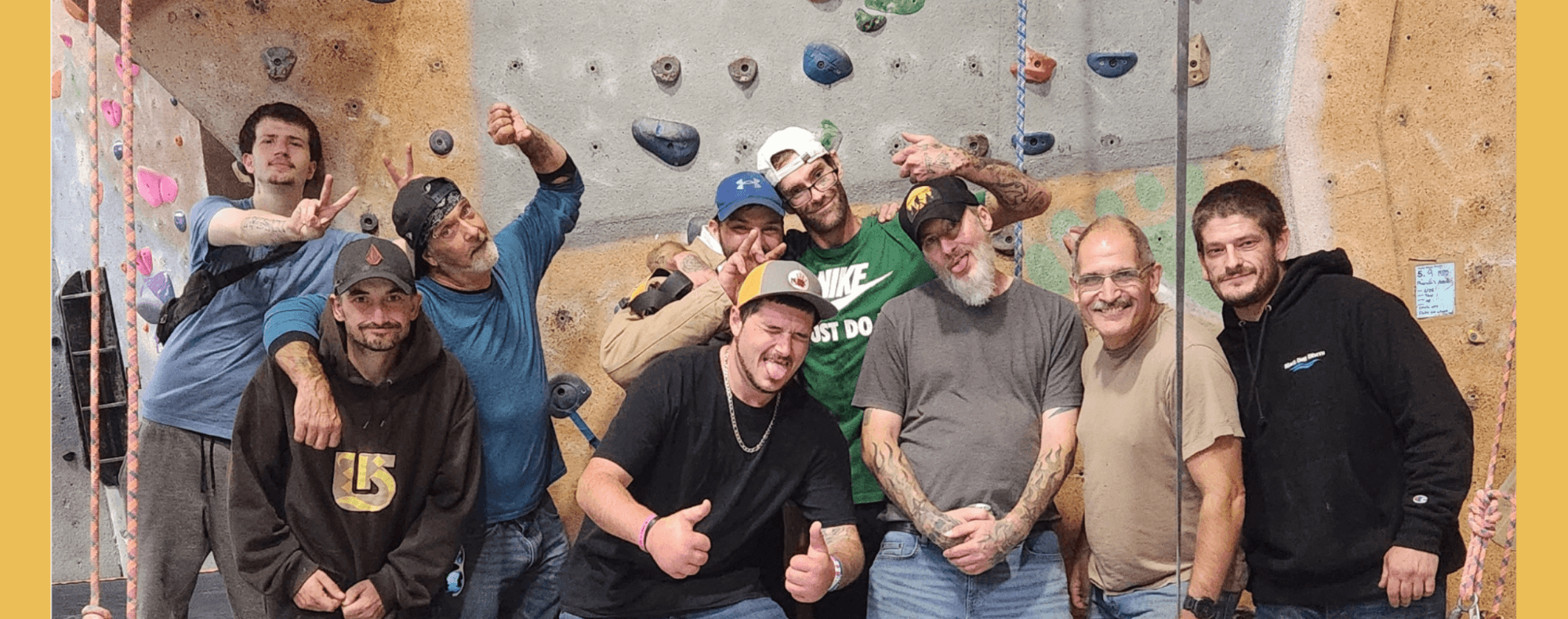
Dismas of Vermont provides a supportive community for people leaving incarceration and trauma through family-style and step-down transitional housing that emphasizes relationship-building with community volunteers, college students, and international volunteers. Living in community actualizes the Dismas of Vermont mission of reconciliation and continues the original 1974 Dismas House of Nashville (TN) model.
Dismas can be described as a “family-like” community, with structured and supportive daily rhythms in our transitional homes. There is a spirit of openness and participation in consensus decision-making by all members of the Dismas community, which sometimes includes students and international volunteers. International volunteers connect with Dismas through the Volunteers for Peace Program and live in a Dismas home for three to six months, supporting house staff. Many countries have been represented: France, Germany, Spain, Japan, Russia, England, Belgium, and many others. It is a great learning experience for both residents and volunteers.
Life at Dismas follows the natural rhythms of family life. During the day, Dismas residents go to work and/or to school. In the evening, everyone shares the evening meal. Afterward, they might attend 12-step meetings, study, help with chores, prepare for the next day, reconnect with their families, relax, or socialize.
The evening meal is the centerpiece of the day, where community building takes place. One of the chief ingredients is the presence of our volunteer cooks. As they come month after month, they become an important part of the Dismas community. If the residential community and staff can be likened to the nuclear family, the volunteer cooks are the extended family: cousins, aunts, uncles, etc.
Creating community at Dismas is central to our mission. The presence of students and the many volunteers communicates a critical message to residents: “I care enough about you that I will spend some part of my life in relationship with you.” It is a message of acceptance rather than rejection, and of inclusion rather than separation.
Each house has a small staff responsible for interviewing and accepting residents, working with residents and volunteers to create community, and providing residents with individual support, guidance, and a connection to social services when needed.
Diversity, Equity, Inclusion, and Justice
Forty years ago, a community consisting of various backgrounds came together to found a space that welcomes all without judgment or bias: Dismas of Vermont. Today, diversity, equity, inclusion, and justice remain vital to the Dismas mission and our values to advance the common good.
Dismas of Vermont strives to be a model of diversity, equity, inclusion, and justice by embracing the power-for-good that difference and intentional inclusion always brings. Our residents, volunteers, staff, and Board of Directors reflect the many facets of the communities we serve and participate in. We respect, value, and celebrate the unique attributes, characteristics, lived experiences, and perspectives that make each person who they are. Bringing together a broad community of stakeholders allows us to collectively and more effectively build programs and implement strategies that contribute to a strong, healthy community, result in innovative solutions, and empowers the collective engagement necessary to create a community that cultivates reconciliation and acceptance.
Diversity is the quality of being different or unique at the individual or group level. This includes age; ethnicity; gender identity; language; nationality; parental status; physical, mental and developmental abilities; race; religion; sexual orientation; skin color; socio-economic status; work and behavioral styles; and the perspectives of each individual shaped by their lived experience. Dismas of Vermont takes the broadest possible view of diversity, going beyond visible differences to affirm the essence of all individuals including the realities, background, experiences, skills and perspectives that make each person who they are.
Equity, versus equality, recognizes that we do not all start from the same place. As such, we must adjust systems so that all persons have access to the services, information, resources, and opportunities to create the same outcomes for all community members. There is never a “one size fits all” solution; as such, Dismas of Vermont approaches its work with people on an individual level.
Inclusion is a strategy to leverage diversity. Diversity always exists in social systems; on the other hand, inclusion must be intentionally created. This is achieved at Dismas of Vermont by creating house and workplace environments where people feel supported, listened to, and able to be at their personal best. In turn, we can collectively and effectively create opportunities for a better life for all.
Justice is the fair treatment of historically and systemically underrepresented and underserved people. Dismas of Vermont utilizes restorative justice in response to the criminalization of social problems (i.e. racial inequality, poverty, and substance use disorder) and makes space for active participation in reconciliation by the offender and the community to repair relationships, challenge power imbalances, rectify harm, and promote inclusivity.