
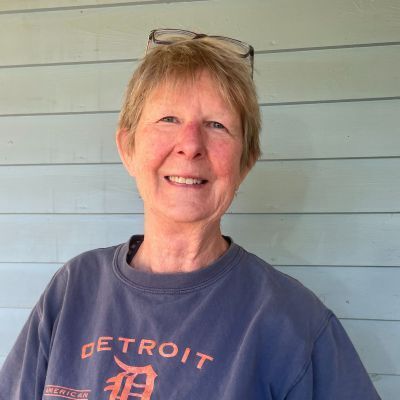
Joyce Mechling has been a part of the Hartford Dismas House since before it opened. At first, “All I knew was that there was this great-sounding opportunity. Initially, I was just a warm body showing up to get the house ready: painting, cleaning, and outfitting. The more I learned, and the more residents I met, the more involved I got.”
Since the house opened in 2014, she has been a faithful Volunteer Cook, served on the Local Council, sat on the Board of Directors, and, most recently, became Volunteer Staff. Her primary interest has always been her time with residents. It isn’t unusual to see Joyce at the Dismas dinner table two or three times a week.
Joyce’s commitment is to the residents, but the value of the connection is a two-way street. In appropriate conversations, she freely shares that she has major depressive disorder and has been living in recovery since the late 80s.
“More than once, I’ve felt myself going downhill, which usually means hospitalization, and so I’ve volunteered to show up for dinner at Dismas. Here I feel a sense of community, know what is expected, am always welcomed, and my absence is noticed. In many ways, Dismas is my safety net.”
Joyce doesn’t go into all her experiences around mental health and substance use with Dismas residents, but she is forthcoming about her story, as many residents have parallel experiences. It is her way of modeling talking about things that are hard and often carry stigma and feelings of shame. “I embrace who I am as this is my path, and there are ways to move forward despite everything; this is what I try to share with the guys. And at dinner during gratitudes, I always say that I’m grateful for my sobriety, because I want them to know that I have been there with them.”
Joyce has experienced the highs and lows of life. She was the first woman to get a PhD in engineering from Dartmouth. She raised a family. She worked as a civilian for the Army and the federal government. She experienced divorce and lost a child to suicide. In retirement, she works with students preparing to become doctors, physician assistants, and nurses, aiming to help them become compassionate practitioners. “I don’t want to be happy; I want to be content. Being content means finding value through meaningful ways to contribute. Dismas is vital for me in feeling valued and appreciated.”
Joyce is one of ~300 Volunteer Cooks at Hartford Dismas House. “Providing dinner every weeknight is a way to acknowledge that residents are valuable. And in return, they are grateful. At dinner, we go around the table and say what we are thankful for. To a newcomer, it sounds scripted, but the gratitude is genuine.”
Joyce is a subtle ambassador for Dismas; her strategy for getting other community members involved always starts with an invitation to join her at the Dismas dinner table. These invitations invite questions and curiosity that ultimately stem from societal stigma, and Joyce gently challenges those stigmas. “So many people don't understand the hard work the guys put in to make the transition back into the community, and that Dismas residents often have ties to the Upper Valley. These are our neighbors.”